How Hybrid Real Estate Courses Work
If you are trying to change careers, keep your current job, or fit real estate school around family life, you probably want to know how hybrid real estate courses work before you commit. That question matters because the format can shape everything from how confident you feel in class to how quickly you finish your requirements and prepare for the North Carolina licensing process.
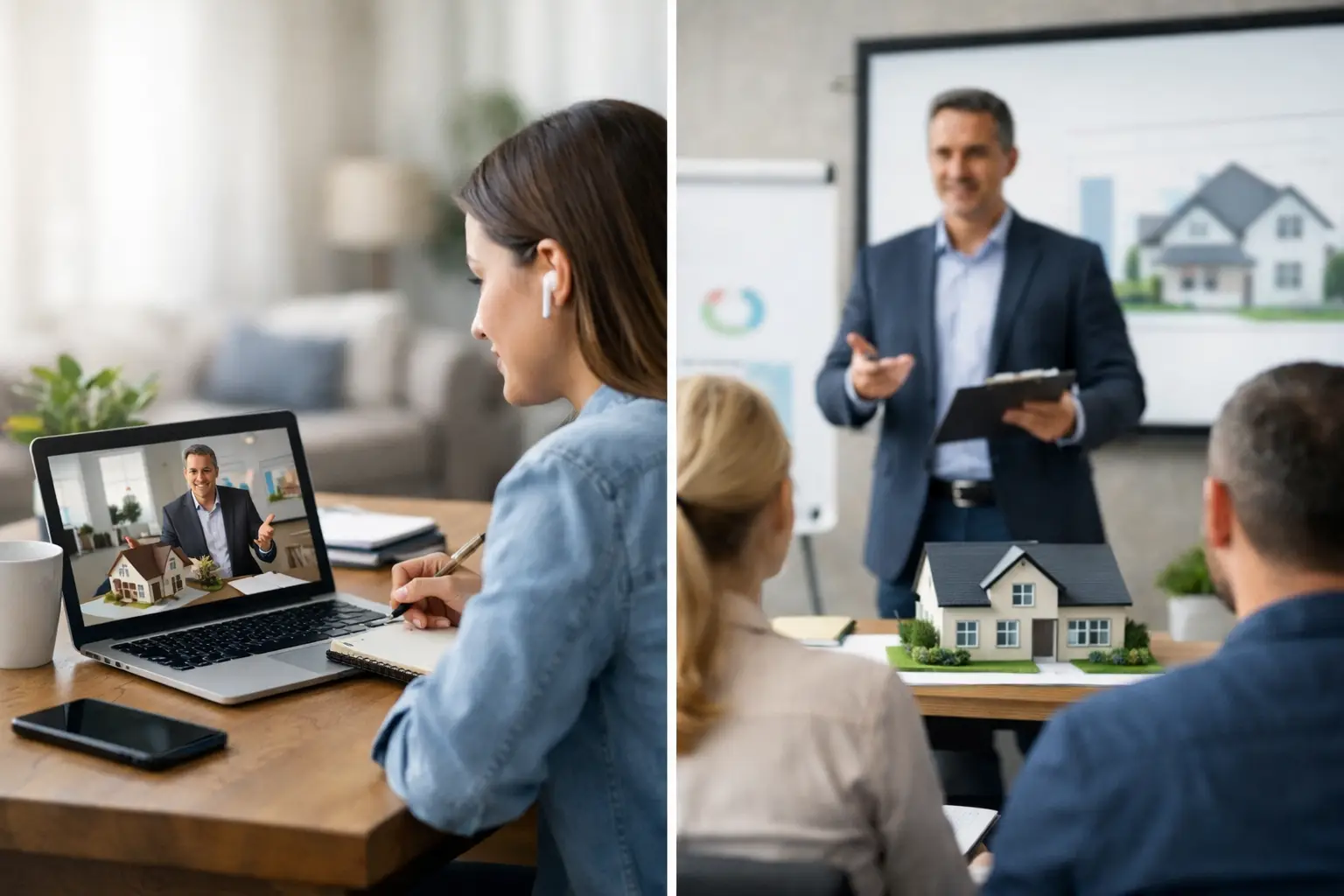
A hybrid course blends online learning with scheduled in-person instruction. Instead of asking you to choose between a fully classroom-based experience and a fully online one, it gives you a practical middle ground. You get flexibility where it helps most, but you also get live guidance, accountability, and face-to-face support when it counts.
For many future agents, that balance is what makes real estate school finally feel possible.
What hybrid real estate courses actually mean
The simplest way to understand a hybrid format is this: part of the course is completed through online work, and part happens in a live classroom setting. The exact split can vary by school and by course type, but the goal stays the same. Students need a format that works with real life without giving up structure or quality instruction.
In real estate education, hybrid learning is especially useful because the material has two sides. One side is information-driven. You need to learn laws, contracts, agency relationships, finance basics, fair housing rules, and state-specific requirements. That type of material can often be handled well through online modules, assigned readings, and guided coursework.
The other side is more interactive. Students often need help understanding how the rules apply in real transactions, what exam questions are really asking, and how to build confidence before stepping into the field. That is where in-person instruction adds real value.
How hybrid real estate courses work in practice
Most hybrid programs follow a rhythm. You complete certain lessons, assignments, or study units online on your own schedule, then attend in-person sessions at designated times. Those live sessions may happen in the evenings, on weekends, or on a planned calendar designed for working adults.
The online portion usually covers core content delivery. You might log into a learning platform, watch instructor-led lessons, complete quizzes, review vocabulary, or work through state-required material. This part gives you flexibility. If you work full time, have children at home, or are managing a move, that flexibility can be the difference between starting your course now and putting your plans off for another year.
The in-person portion creates structure. It is often used for instructor review, concept clarification, exam prep, discussion, and direct support. If a chapter on contracts or agency law looked simple online but felt confusing once you tried the practice questions, the classroom session is where that confusion gets cleared up fast.
That combination helps students avoid a common problem with fully online education: feeling like they are teaching themselves.
Why students often learn better in a hybrid format
Real estate attracts people from many different backgrounds. Some students are coming from military service. Some are leaving retail, office work, or healthcare. Some are already licensed and need post-licensing or continuing education that fits around an active schedule. Very few of them have the same learning style.
That is one reason hybrid education works well. It meets students where they are.
If you are independent and self-motivated, the online side gives you room to move at a practical pace. If you learn best by asking questions and hearing real examples, the classroom side gives you direct access to an instructor. You are not locked into one method that may or may not fit how you absorb information.
There is also the accountability factor. A flexible schedule is helpful, but too much flexibility can backfire. Students sometimes enroll in self-paced programs with the best intentions, then fall behind because work, family, and everyday life take over. Hybrid classes create checkpoints. You still get breathing room, but you also have a schedule to keep you moving.
A closer look at the online portion
When people hear "online learning," they sometimes assume it means minimal support. In a strong hybrid course, that should not be the case.
The online portion is usually designed to help you cover required content efficiently. It may include lessons that explain key concepts, reading assignments, short knowledge checks, and progress tracking so you know what you have completed and what still needs attention. Depending on the course, you may also have deadlines that keep your progress aligned with the live class schedule.
This format is useful for material that benefits from repetition. If you need to review license law twice, pause during a section on financing, or revisit vocabulary before a quiz, online access makes that easier. In a traditional classroom, once the lecture moves on, it moves on. In a hybrid format, you often have more room to revisit what you need.
That said, online learning still requires discipline. If you know you struggle with procrastination, a hybrid format is often better than going fully online, but you still need to show up for yourself between class sessions.
What happens during the in-person sessions
The live classroom side is where many students start feeling like real estate is becoming a real career path instead of just a course they bought.
In-person sessions give you direct access to instructor insight, local market context, and practical explanations that do not always come through clearly in text alone. A strong instructor can take a topic that seems dry on paper and connect it to what actually happens in North Carolina transactions. That matters, especially when you are preparing for state licensing expectations and eventually talking to real clients.
These sessions can also help with exam preparation. Students often discover that passing the course and passing the licensing exam are related but not identical challenges. Classroom time gives instructors the chance to point out common test traps, explain why an answer is correct, and reinforce the concepts most likely to affect your results.
There is another benefit that should not be overlooked: community. When you attend in person, you are not learning in isolation. You meet other students who are making a career move, working through the same material, and aiming for the same next step. That kind of environment can keep your momentum up, especially if this is your first step into the industry.
Who benefits most from hybrid real estate courses
Hybrid learning is a strong fit for students who need flexibility but do not want to sacrifice support. That includes working professionals, parents, military spouses, commuters, and career changers who need a format that respects their schedule without leaving them on their own.
It is also a smart option for students who feel uncertain about jumping into a fully online program. If you know you want instructor access, live explanations, and a more connected learning experience, hybrid training can give you that while still helping you avoid the rigidity of attending every hour in person.
For some students, though, the answer depends on temperament. If you prefer a highly structured environment and know you perform best when everything happens live in a classroom, traditional in-person instruction may still be the better fit. If your schedule is extremely unpredictable and attending set class sessions would be difficult, a fully online format might make more sense. Hybrid is often the middle path, not the automatic best choice for every person.
How hybrid courses support career readiness, not just course completion
A good real estate course should do more than help you check a requirement box. It should help you build momentum toward a real career.
That is where hybrid learning can stand out. Because students spend time both working independently and interacting with instructors in person, they often develop two strengths at once. They build the self-management habits needed for a flexible career, and they gain the direct coaching that helps them avoid early mistakes.
This matters in real estate. Once you are licensed, no one is going to manage every hour of your day for you. You will need initiative, follow-through, and the ability to keep learning. At the same time, you will also need guidance, mentorship, and practical understanding of how the business works in your market.
A school like Fayetteville Real Estate School uses hybrid learning to support both sides of that equation. The format is not just about convenience. It is about helping students prepare for licensure, build confidence, and move toward brokerage relationships and career opportunities with a stronger foundation.
What to ask before you enroll
If you are considering a hybrid course, ask how the schedule is structured, how much work is done online versus in person, what kind of instructor support is available, and how the program helps students prepare for the exam. Those details matter more than the word "hybrid" by itself.
You should also think honestly about your own schedule and learning style. Flexibility is valuable, but only if it matches how you actually function week to week. The best course format is the one you can complete successfully and carry with confidence into the licensing process.
For many aspiring agents in North Carolina, hybrid learning offers the right balance of freedom and support. It can help you keep moving toward a better career without putting the rest of your life on hold.
The right class format should make your next step feel achievable, and when that happens, real estate stops feeling like a distant idea and starts looking like a plan.
