What to Bring on Your NC Real Estate Exam Day
The search for what to bring exam day NC becomes very real when your testing appointment is on the calendar. You have completed the coursework, studied vocabulary, worked through practice questions, and built the discipline to pursue a new career. Do not let a missing ID, an unfamiliar testing-center rule, or a rushed arrival create an avoidable setback.
Your North Carolina real estate exam day should feel organized, calm, and focused. The goal is not to carry a bag full of supplies. It is to arrive with the few items the testing center requires, understand what must stay outside the exam room, and give yourself enough time to settle in before the clock starts.
What to Bring on NC Real Estate Exam Day
The final authority is always the current North Carolina real estate examination Candidate Information Bulletin and the instructions attached to your appointment confirmation. Testing providers can update their policies, so review both documents shortly before exam day. As a practical starting point, prepare these essentials the night before:
- Your required identification documents, with names that match your exam registration exactly
- Your appointment confirmation or confirmation number
- Prescription eyeglasses, if you need them to read comfortably
- Your keys and a payment method for parking, if applicable
- Directions, parking details, and the testing center's phone number saved or printed for use before check-in
That is intentionally a short list. Most testing centers limit personal items in the exam room, and carrying extra items can create unnecessary questions at check-in.
Bring the right identification
Identification is the item most likely to determine whether you can test. North Carolina exam candidates are commonly required to present two valid forms of identification. Typically, one must be a current government-issued photo ID with your signature, such as a driver's license, state ID, passport, or military ID. The second form generally must include your signature.
Read the current bulletin carefully because accepted documents and expiration rules matter. A recently expired driver's license may be perfectly useful for everyday errands but still fail the testing-center requirement. A name mismatch can also cause trouble. If you registered under a different last name than the one shown on your ID, contact the exam provider before test day rather than hoping staff can make an exception at the desk.
Military families should pay particular attention to this step. A move, marriage, deployment, or transition between states can leave your registration and identification records out of sync. Resolve that issue early. It is far easier to update a record before your appointment than to reschedule after arriving at the center.
Keep your appointment information accessible
You may not need a printed confirmation, but bringing it or saving the confirmation number in an accessible place is a smart safeguard. Do not depend entirely on finding an email at the front desk, especially if your phone must be turned off or stored away during check-in.
Your confirmation can help you verify the correct location, reporting time, and any center-specific instructions. Some candidates lose time by driving to a similarly named business, arriving at a classroom location rather than the testing center, or assuming the appointment time is the check-in time. Those are preventable problems.
What to Leave Out of the Testing Room
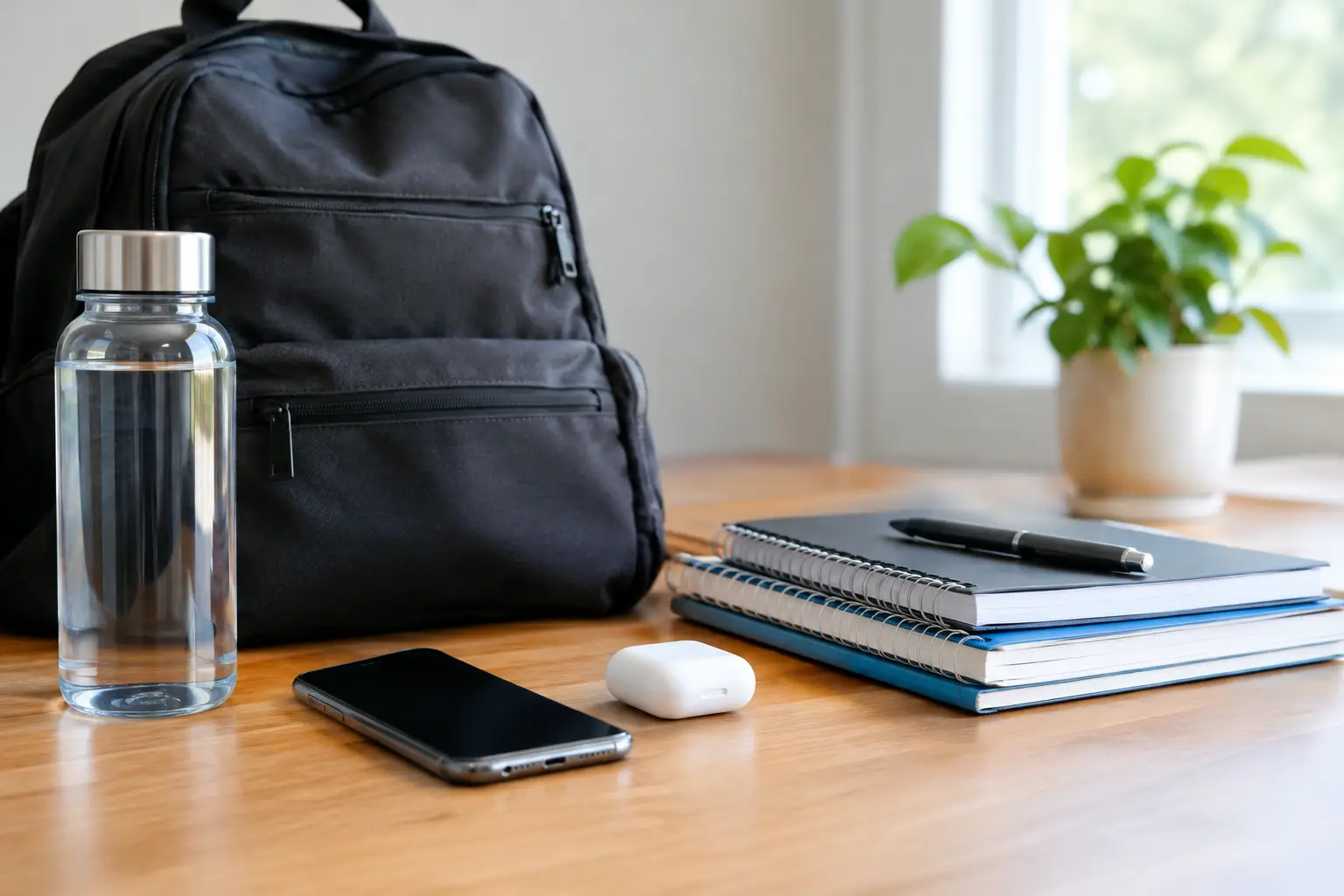
A real estate exam is a secure, proctored assessment. That means the testing room is not a place for study notes, personal electronics, snacks, or your favorite calculator. Expect policies that restrict or prohibit phones, smartwatches, fitness trackers, earbuds, bags, books, paper, pens, pencils, and outside study materials.
Do not assume an item is acceptable because you do not plan to use it. A phone in a pocket or a smartwatch on your wrist can create an issue even if it never makes a sound. Turn off electronics before you enter the check-in process and follow staff instructions for storing personal belongings. Locker availability and storage procedures can vary by location.
You also should not bring your own calculator unless the current exam instructions specifically permit it. Many computer-based exams provide the calculation tools or scratch materials allowed for the test. Bringing an unapproved device can slow down check-in and add stress before you begin.
If you need medication, medical equipment, or an approved testing accommodation, do not leave the decision until exam morning. Contact the exam provider in advance and obtain clear instructions. Necessary accommodations are handled through a process, not through a last-minute conversation at the front counter.
Plan Your Arrival Like a Professional Appointment
Treat the exam like your first appointment with a client: arrive early, know where you are going, and leave room for the unexpected. Your confirmation may specify a reporting time that is earlier than the scheduled exam start. Build your travel plan around that reporting time, not the minute you expect to begin answering questions.
A good rule is to map the route several days ahead, then check it again the night before. Look at construction, traffic patterns, parking entrances, and whether the building has a suite number or security desk. If you are testing in an unfamiliar city, consider a practice drive. For parents, caregivers, and working professionals, confirm that your backup transportation and child-care plans are just as solid as your study plan.
On the morning of the exam, eat a normal meal that will keep you steady without making you sluggish. Wear comfortable layers because testing rooms can feel cooler or warmer than expected. Choose simple, professional clothing without bulky pockets or accessories that could complicate the security process.
Arriving early is not about sitting nervously in a parking lot. It gives you time to park, find the correct entrance, use the restroom, complete check-in, and reset your mindset. If you arrive rushed, you may spend the opening minutes of your exam trying to recover your focus.
Use the Check-In Process to Your Advantage
Check-in procedures can feel formal, but they are there to protect every candidate's score. Staff may verify your identification, ask you to store personal belongings, take a photo, collect a signature, or complete other security steps. Follow directions promptly and ask procedural questions before the exam begins.
This is also the time to clarify approved breaks, restroom procedures, and how to get help if there is a technical problem. You do not need to know every detail before you sit down, but you should know what to do if something interferes with your ability to test.
Once you are seated, take a slow breath before starting. Read the tutorial and on-screen instructions. Use your time with purpose, but do not confuse speed with confidence. If a question seems difficult, apply the principles you learned, eliminate clearly wrong answers, and avoid letting one question steal attention from the rest of the exam.
The Night-Before Exam Day Check
The strongest exam-day routine starts before the morning alarm. Put your IDs, confirmation information, glasses, keys, and clothing in one place. Charge your phone for travel and communication, while remembering it will need to be stored during the exam. Set two alarms if oversleeping is a real concern, and let someone close to you know when you expect to finish.
Then stop cramming. A short review of key concepts can help, but trying to learn an entire topic at midnight usually creates fatigue instead of confidence. Your final preparation should support clear thinking: adequate sleep, a simple plan, and a reminder that you have already done the work to earn your seat in that testing room.
For candidates who prepared through Fayetteville Real Estate School, that preparation is designed to go beyond memorizing terms. It is about understanding the decisions, duties, and North Carolina rules you will use as a real estate professional. Exam day is one step in building the career freedom and earning potential that brought you to real estate in the first place.
Let Preparation Carry You Through the Door
Your exam appointment is not the moment to prove you can manage chaos. It is the moment to show what focused preparation looks like. Confirm your current testing requirements, pack only what you need, arrive with time to spare, and walk in knowing that a well-planned morning protects the effort you have already invested. Then give the exam your full attention and take the next step toward the career you are ready to build.
